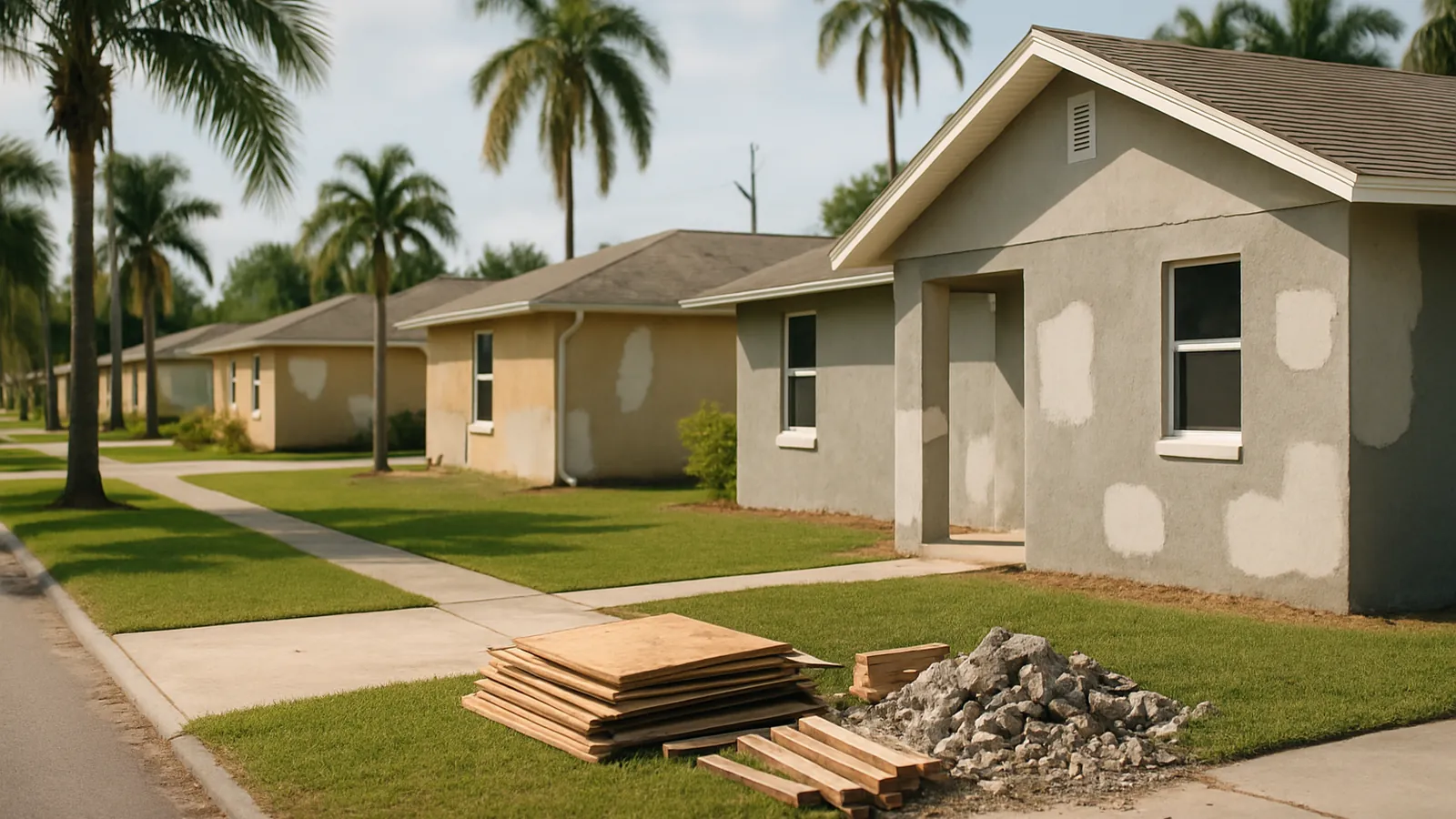
Crawl space mold removal in Mobile runs $2,500–$9,000. Humidity here holds between about 71% and 77% through the year, the water table is high, and a vented crawl takes that air in continuously — so framing under the house stays at an elevated moisture content year-round.
Why the space never dries, how raised-pier homes differ, and the order the work has to happen in.
No drying season, by the numbers
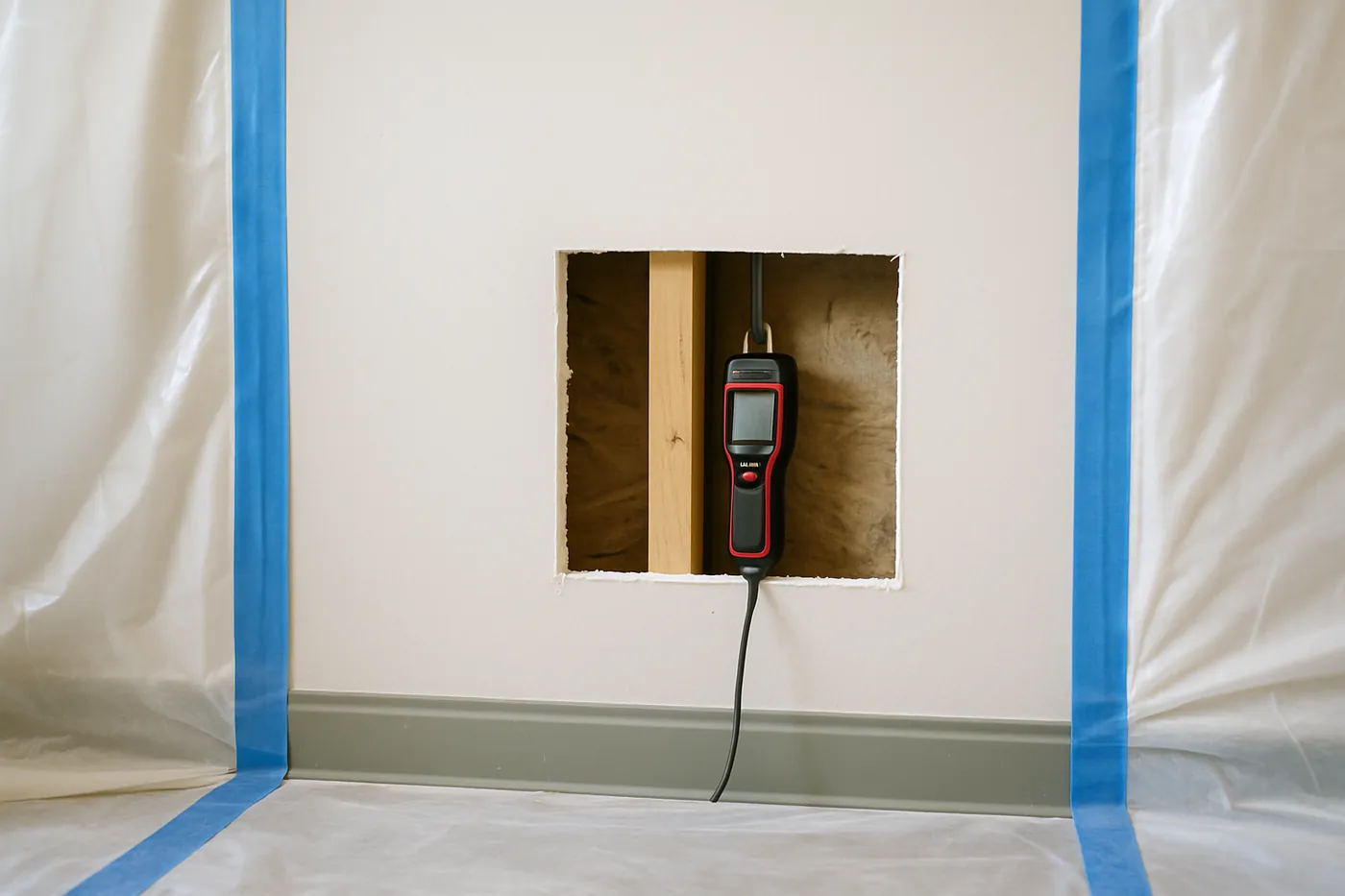
In most climates a crawl space cycles: it takes on moisture, then gets a stretch of dry weather that pulls it back. On the Gulf Coast that second half largely does not happen. Relative humidity sits near or above 70% for most of the year, and the wettest month is August, when the space is also warmest — warm and wet at the same time is the condition wood decay organisms want.
Add a high water table and soil that stays damp beneath a vented crawl, and you have a space where evaporation runs continuously into air that is already carrying about as much water as it can hold. The framing does not fail because of one event. It fails because nothing ever reverses.
Raised piers versus enclosed crawls
| Open pier foundation | Enclosed vented crawl | |
|---|---|---|
| Air movement | Free — helps considerably | Restricted, humid air pools |
| Main exposure | Outdoor humidity and rain blowing underneath | Soil evaporation plus vent air |
| Typical finding | Growth on joists and subfloor, worst on the weather side | Growth throughout, worst at the soil end |
| Ductwork risk | High — ducts fully exposed | High — ducts in humid still air |
| Right fix | Remediation, duct correction, skirting detail | Water first, then remediation, then sealing |
| Cost | $2,500–$9,000 | $2,500–$9,000 plus sealing |
Clearance is a cost driver nobody quotes
Gulf Coast crawls are frequently tight. Below roughly eighteen inches, material handling and equipment access stop being details and start being the thing that sets labor. Some scopes need a working trench excavated before remediation can begin at all.
We measure clearance at several points during the inspection and write it into the scope as a number, because a quote produced without it is a quote that gets revised once a crew is under there.
The order that holds
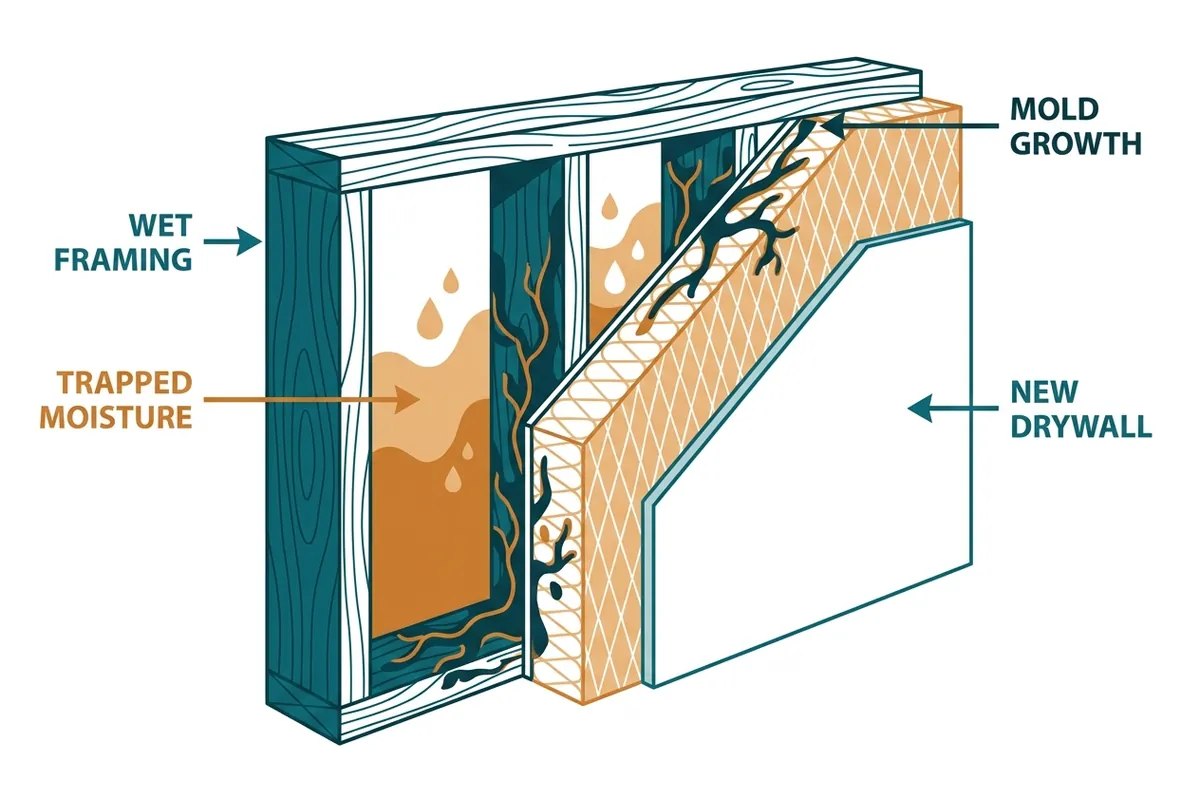
Correct water first, remediate second, seal third. Sealing a crawl that is still taking water traps it and hands a dehumidifier a load it was never sized for. Remediating before the water is corrected produces clean framing that is wet again by August.
We price the three stages separately so the sequence is visible and you can phase it. If your duct system runs under the floor, the return side gets checked at the same visit, because a leak there distributes this problem to every room upstairs. Numbers are in the cost guide.
Under the house, answered plainly
What does crawl space mold removal cost in Mobile?
Budget $2,500-$9,000. Three things move it: the area involved, how much of the framing has been affected, and whatever has to change so the space stops staying wet. Headroom matters more here than people expect - carrying material and equipment through a space you cannot sit upright in slows everything down.
Why is mold under a Mobile house so common?
Because the space never gets a drying season. Relative humidity here runs roughly 71% in April to 77% in July, the water table is high, and a vented crawl admits that air continuously. Framing under the house sits at an elevated moisture content for most of the calendar rather than cycling wet and dry.
Does sealing the crawl space fix it?
It is most of the answer once the water is handled. Sealing stops soil evaporation and stops humid outdoor air entering through vents, and a sized dehumidifier holds the space where wood is stable. What sealing cannot do is stop water that is actively entering - that gets corrected first.
What about homes on raised piers?
Open pier foundations behave differently from enclosed crawls: air moves freely, which helps, but framing is fully exposed to outdoor humidity and to wind-driven rain blowing in underneath. On those homes the work concentrates on the framing itself, on skirting details, and on ductwork in the open air.
Can mold under the house affect the rooms above?
Mold under the house can affect the rooms above, through two routes. Air moves upward through a house and replacement air comes from the lowest opening available, and any leak on the return side of a duct system running under the floor pulls that air in and distributes it. A musty first floor with nothing visibly wrong in it usually comes from below.
Get a free Mobile mold inspection
Describe what you have found — a stain that appears only after a hard blow, a room that smells musty every August, dark growth behind furniture on an outside wall, a ceiling mark that showed up after a storm. Two details help most: which wall, and whether it tracks the weather. Expect a reply the same working day.