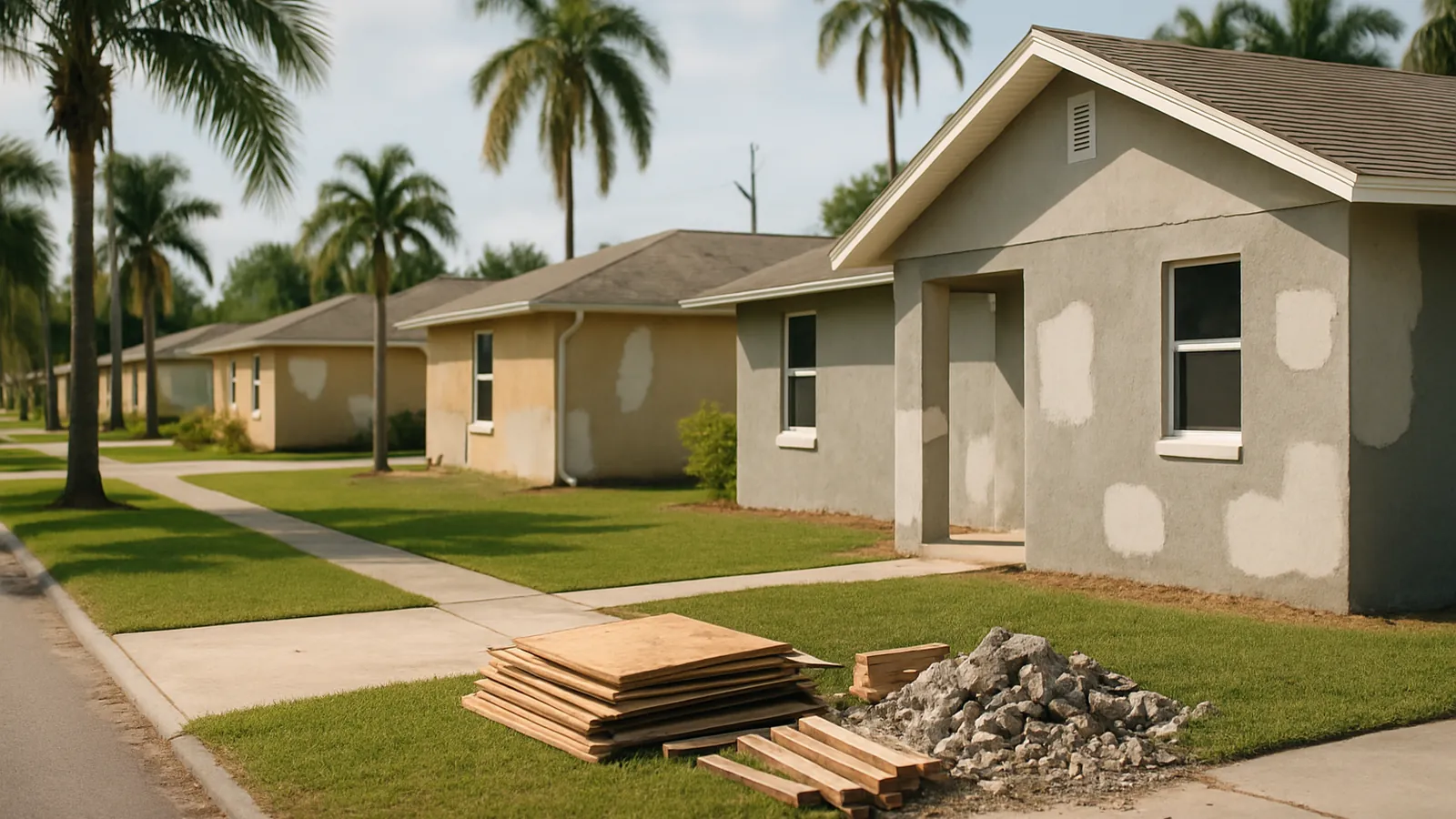
Mobile Mold Removal Co. serves Mobile plus Daphne, Fairhope, Spanish Fort, Saraland, Theodore, Semmes, Tillmans Corner, Satsuma, and Prichard. Every one gets the same free inspection with moisture readings and a storm-direction review, and travel, where it applies, is its own line.
DaphneFairhopeSpanish FortSaralandTheodoreSemmesTillmans CornerSatsumaPrichard
Every town we cover, and what changes there
Each of these has its own page, because the ground and the housing stock are not the same across the region. The short version:
Daphne — Which wall faces the water
On the Eastern Shore, storms arriving across Mobile Bay hit one side of a house considerably harder than the others. Read what that means for a Daphne property.
Fairhope — What happens to a closed-up house
A meaningful share of Fairhope property sits empty for weeks at a stretch, and the standard economy is to set the thermostat well up or switch it off entirely before leaving. Read what that means for a Fairhope property.
Spanish Fort — A sealed house needs somebody at the controls
Building practice on this ridge has tightened considerably, and the payoff shows up on the power bill. Read what that means for a Spanish Fort property.
Saraland — Cold is not the same as dry
An air conditioner removes moisture only while it runs. Read what that means for a Saraland property.
Theodore — The line on the wall decides the job
On lower-lying property, a storm can leave standing water inside the building, and what happens next depends almost entirely on one measurement: how far up the wall the moisture actually travelled. Read what that means for a Theodore property.
Semmes — Distance is the problem
Larger homes on larger lots mean longer duct runs, and out here those runs generally cross an attic that reaches punishing temperatures in July while carrying air that is close to saturated. Read what that means for a Semmes property.
Tillmans Corner — A slab is always giving off moisture
Concrete in contact with ground moisture moves that moisture upward continuously. Read what that means for a Tillmans Corner property.
Satsuma — Window perimeters are the usual suspect
Original windows in older houses were installed with details and materials that assumed rain falls downward. Read what that means for a Satsuma property.
Prichard — Flashing does the hard work
Shingles get the attention, but the details that actually keep water out of a roof are the metal ones: valley flashing, step flashing where a roof meets a wall, pipe boots, and the counterflashing at chimneys. Read what that means for a Prichard property.
Four ways it happens here
Directional exposure — Daphne, Satsuma — where storms hit one elevation far harder than the others and the leak reports the wind rather than the rainfall. Unoccupied houses — Fairhope especially — where a system switched off for a few weeks lets the interior equalize with air running near 70% humidity, and growth appears with nobody there to smell it developing.
Mechanical causes — Saraland, Semmes, much of the newer stock — where an oversized system cools without dehumidifying, or a stretch of failed duct insulation puts a cold surface into a hot attic. Ground and slab — Theodore, Tillmans Corner — where storm water rises or a slab vents moisture up into a wall assembly that has been sealed over.
Three constants across all ten
The rain arrives hard. 67.1 inches across roughly 59 rain days, which is better than an inch and a quarter per event and frequently delivered at an angle.
Nothing gets a drying season. Humidity holds near 71 to 77 percent through the year, so surfaces that get wet stay wet longer than they would almost anywhere else.
The AC makes cold surfaces. For months at a time your own system is chilling building surfaces below the dew point of the air around them, which grows things without any leak being involved.
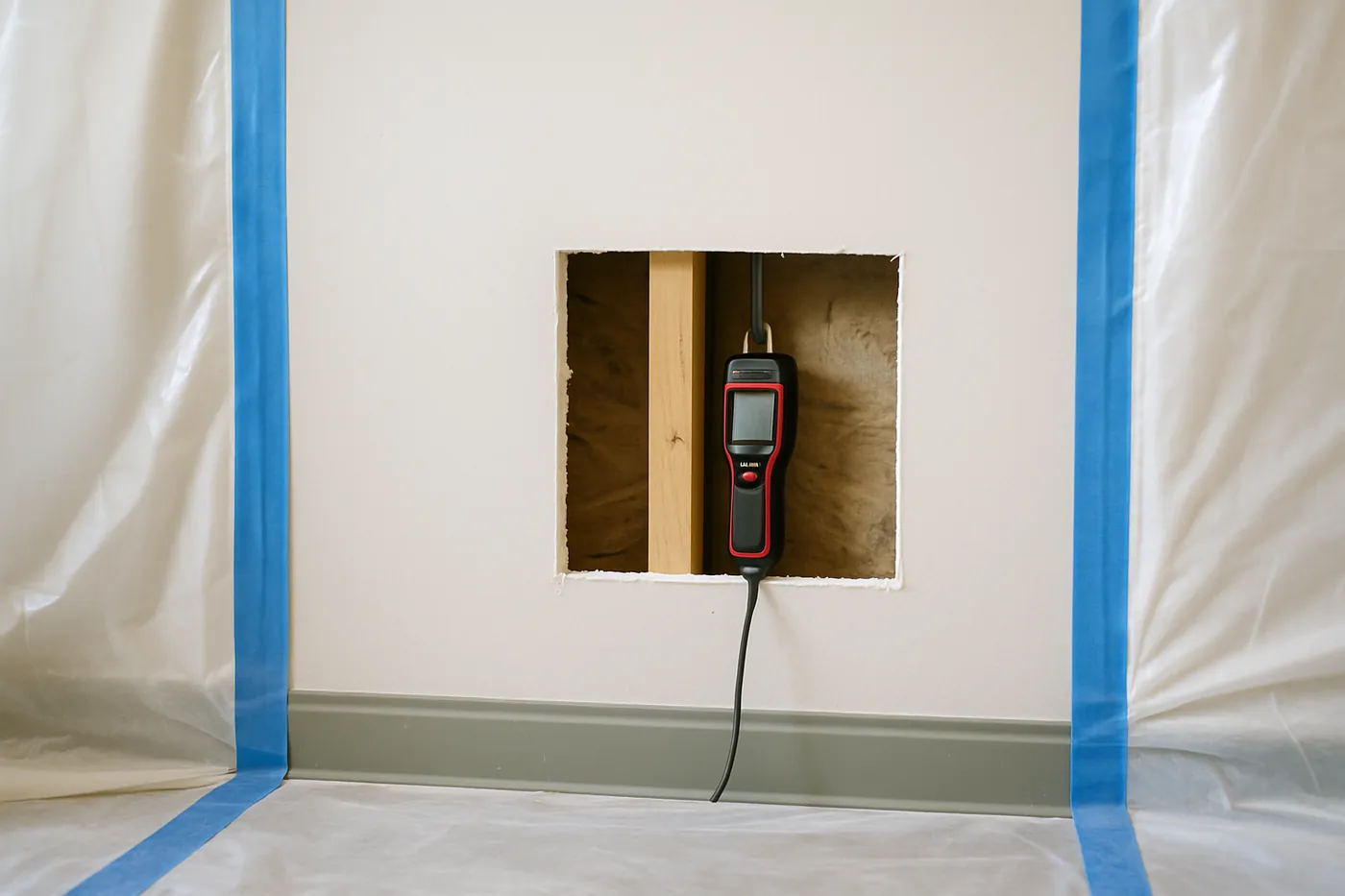
Same figures on both sides of the bay
Crossing the causeway does not change a price. A Fairhope address and a Prichard address get the same numbers: $1,500–$6,000 to remediate, $2,500–$9,000 for work underneath, $1,500–$5,000 in an attic, $1,000–$4,000 on a duct system. The variable is which of those your readings actually call for, and the cost guide takes each apart.
Live somewhere that is not on this page? Say where and we will give you a straight yes or no — the working radius runs wider than these ten.
Service area questions
Is there a travel charge across the bay?
None. Both counties sit inside the radius we work as standard, which means an Eastern Shore address costs what a west-side address costs. Past those county lines, mileage becomes a visible line item with a figure attached, and we quote it on the phone rather than in the invoice.
Does the problem change from one side of the bay to the other?
The presentation does. Eastern Shore homes take concentrated directional exposure from storms crossing the water. West-side neighborhoods skew toward slab construction and older roofs. Newer subdivisions on both sides bring tight envelopes and oversized systems. That changes what we look at first.
How quickly can you get out after a storm?
As fast as the roads allow, and we prioritize active water over everything else, because drying is a race against a 24-to-48-hour clock. If the calendar is genuinely full we tell you that rather than booking you out and hoping.
What does the free inspection include out in the county?
Everything the in-town version covers, with a longer stretch spent outside. Bigger parcels have more ground to cross, more outbuildings, and more places runoff can be arriving from, so the exterior half of a county visit simply runs longer. The document you receive is identical in format.
What it means when we say we cover a town
It means the free walkthrough happens at your address on the same terms it would in Mobile — the same moisture readings and photographs of what is growing, the same written scope afterwards, and travel quoted as its own line rather than buried inside the others. If a job is far enough out that travel is material, you will see that number before you agree to anything.
Damp problems get worse while they wait, so distance never becomes a reason to put a visit off.
These 9 communities are where we work regularly enough to know the ground before we arrive. That is the honest boundary: not a radius drawn on a map, but the places we have looked at enough properties to recognise what we are seeing.
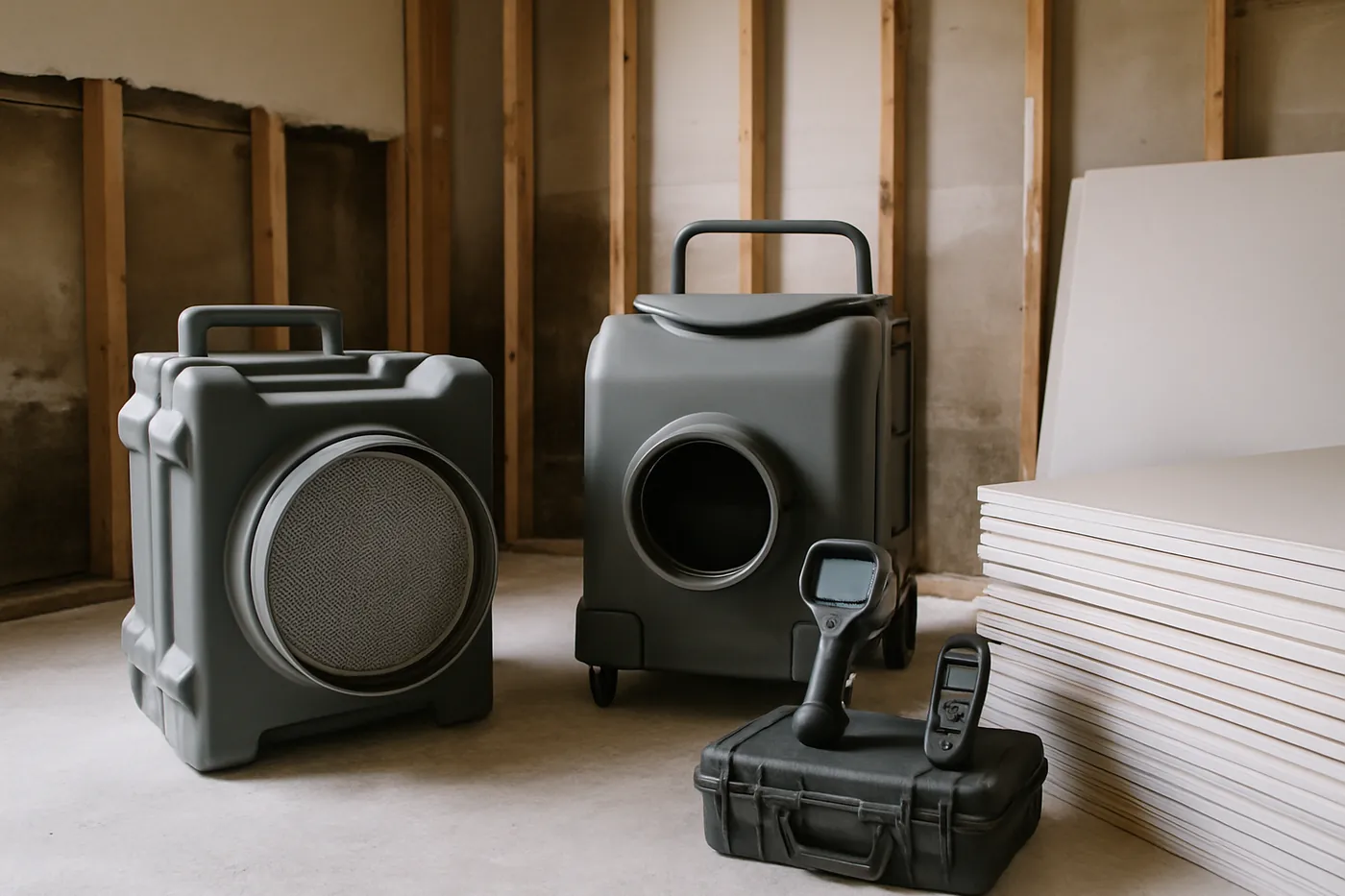
Get a free Mobile mold inspection
Describe what you have found — a stain that appears only after a hard blow, a room that smells musty every August, dark growth behind furniture on an outside wall, a ceiling mark that showed up after a storm. Two details help most: which wall, and whether it tracks the weather. Expect a reply the same working day.