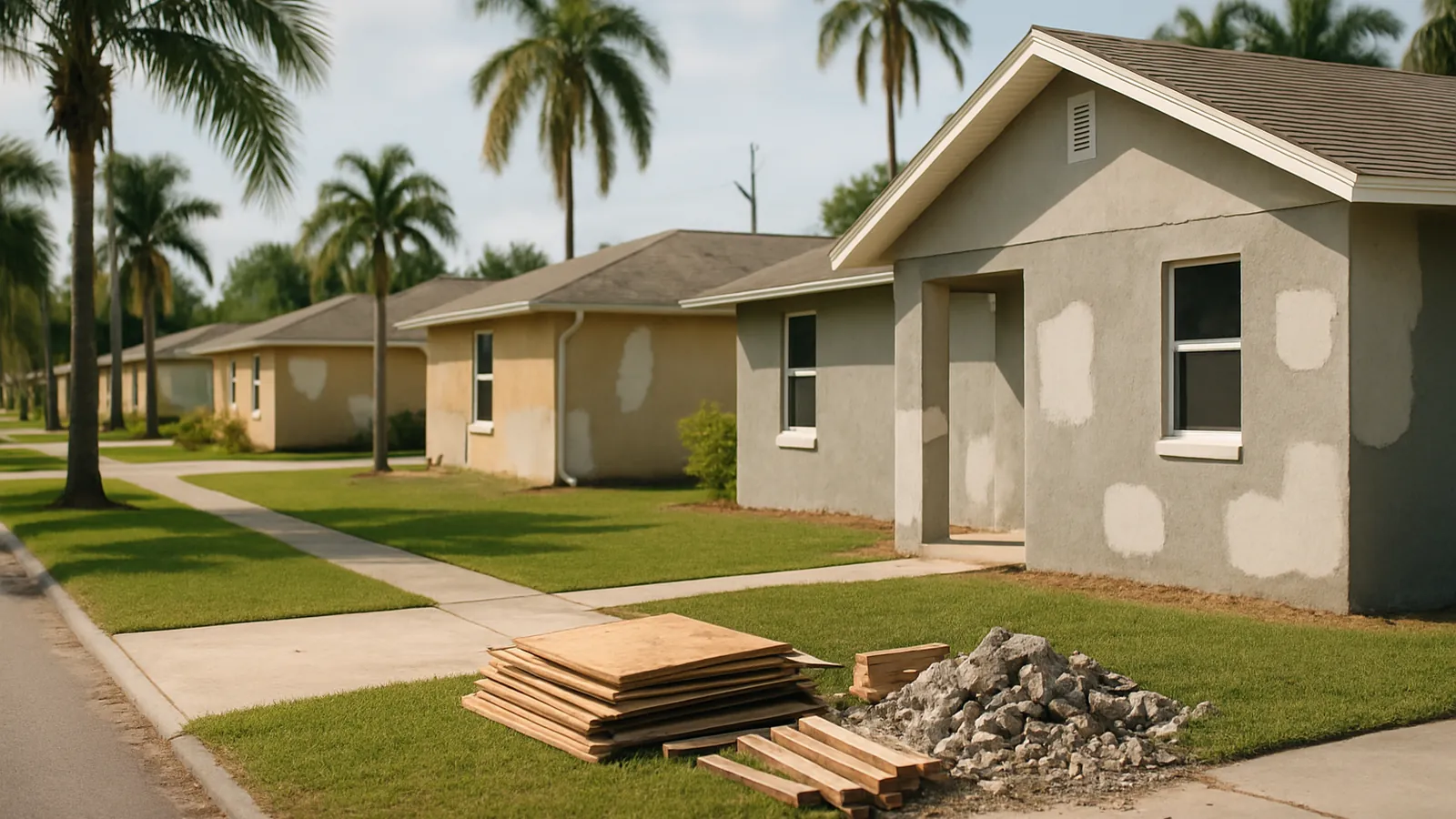
A mold removal inspection here costs nothing and runs about an hour. It begins outdoors, on whichever elevation the weather has been hitting, and ends with a written scope naming how water entered. Moisture readings, photographs, and line prices come with it, yours to keep either way.
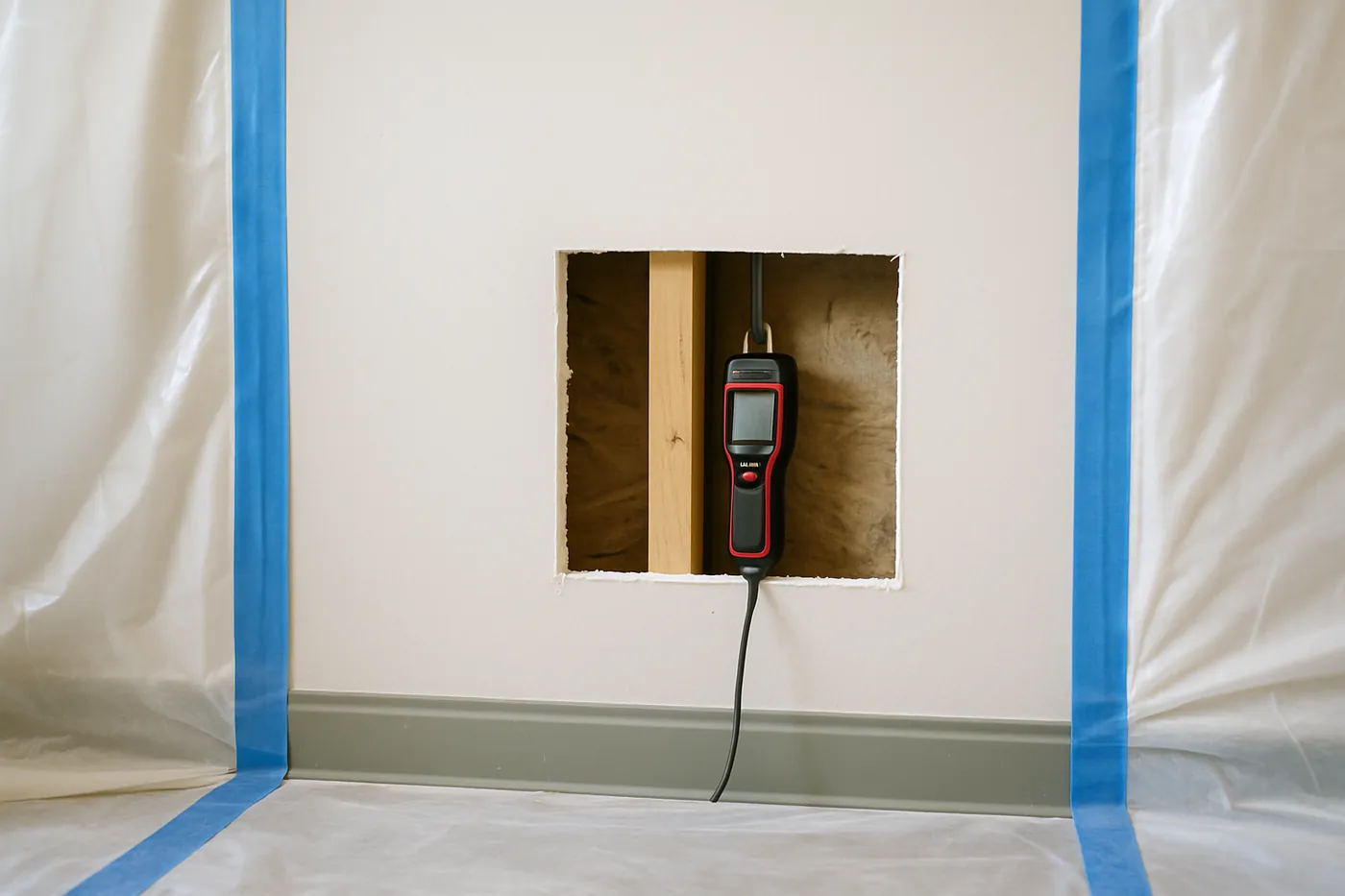
We start outside, on one wall
Most inspections begin at the stain. Ours begins at the elevation you told us the weather was coming from, because on this coast that wall is usually holding the answer. Window heads, the joint where cladding laps, the point a lower roof meets a taller wall — those are the details driven rain tests and vertical rain does not.
Only after that do we work inward: moisture content in the affected material, cavity values where the numbers justify opening something, and then the two places Gulf houses hide trouble — underneath, and the attic, where duct insulation gets a closer look than the decking does.
The document you end up with
Four things make a scope usable rather than decorative, and ours carries all four. The readings, with locations, so you can hand them to somebody else. The standard the work will follow, named. A split between what leaves the building and what gets cleaned where it stands, with drying stated as a moisture number instead of a promise. And a sentence on how water got in.
When closing that entry path is a roofer's job or a glazier's, the scope says so and estimates it as a separate line rather than folding it into ours or quietly leaving it out. That is the honest version of a Gulf Coast quote, and the cost guide shows why it matters.
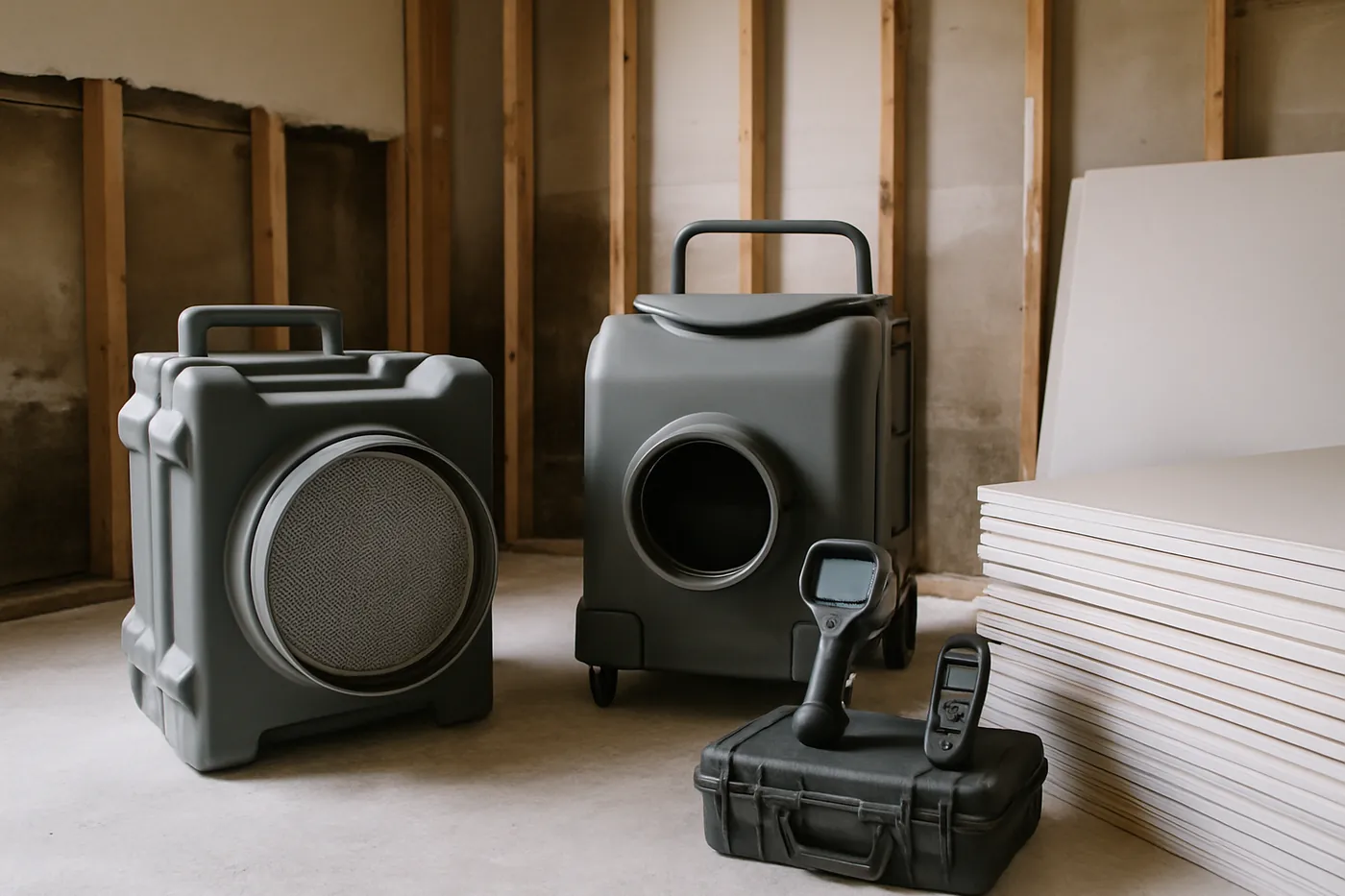
Under contract on a coastal house?
Say so and we will fit the visit inside your inspection period. There are two questions worth paying an hour to answer before you sign here, and neither shows up on a standard home inspection: what the weather-facing wall has been absorbing for the last decade, and whether the duct system is condensing in the attic every July.
Inspection questions
Is the inspection really free?
The inspection is really free. Nothing on the visit is billable - not the readings, not the exterior review, not the crawl or attic entry, not the written document at the end. We invoice work you approve, and only that. Plenty of these calls finish with us telling somebody to replace three feet of duct wrap, and those cost nothing either.
How long does it take?
An hour is typical. It stretches on larger homes, on properties with long duct runs, where clearance underneath is tight, or when the exterior needs a proper walk. Time spent on the weather-facing wall pays for itself; time saved by writing a scope from the driveway does not.
Do I need to be home?
Ideally for the last fifteen minutes, when numbers become a plan. And if anybody in the household remembers what the sky was doing the first time the stain showed up, have them there - that recollection routinely saves more time than anything else in the visit. Buyers who cannot make it get the report and photographs sent straight through.
What if I already have a quote?
Bring it and we will go through it line by line beside our own numbers. Four things decide whether it is a real scope: a named standard, containment spelled out, drying given as a moisture value, and - the one that matters most on this coast - whether closing the entry path is inside their price or outside it. Sound scope and a better price means you should take theirs, and we will tell you so.
Get a free Mobile mold inspection
Describe what you have found — a stain that appears only after a hard blow, a room that smells musty every August, dark growth behind furniture on an outside wall, a ceiling mark that showed up after a storm. Two details help most: which wall, and whether it tracks the weather. Expect a reply the same working day.