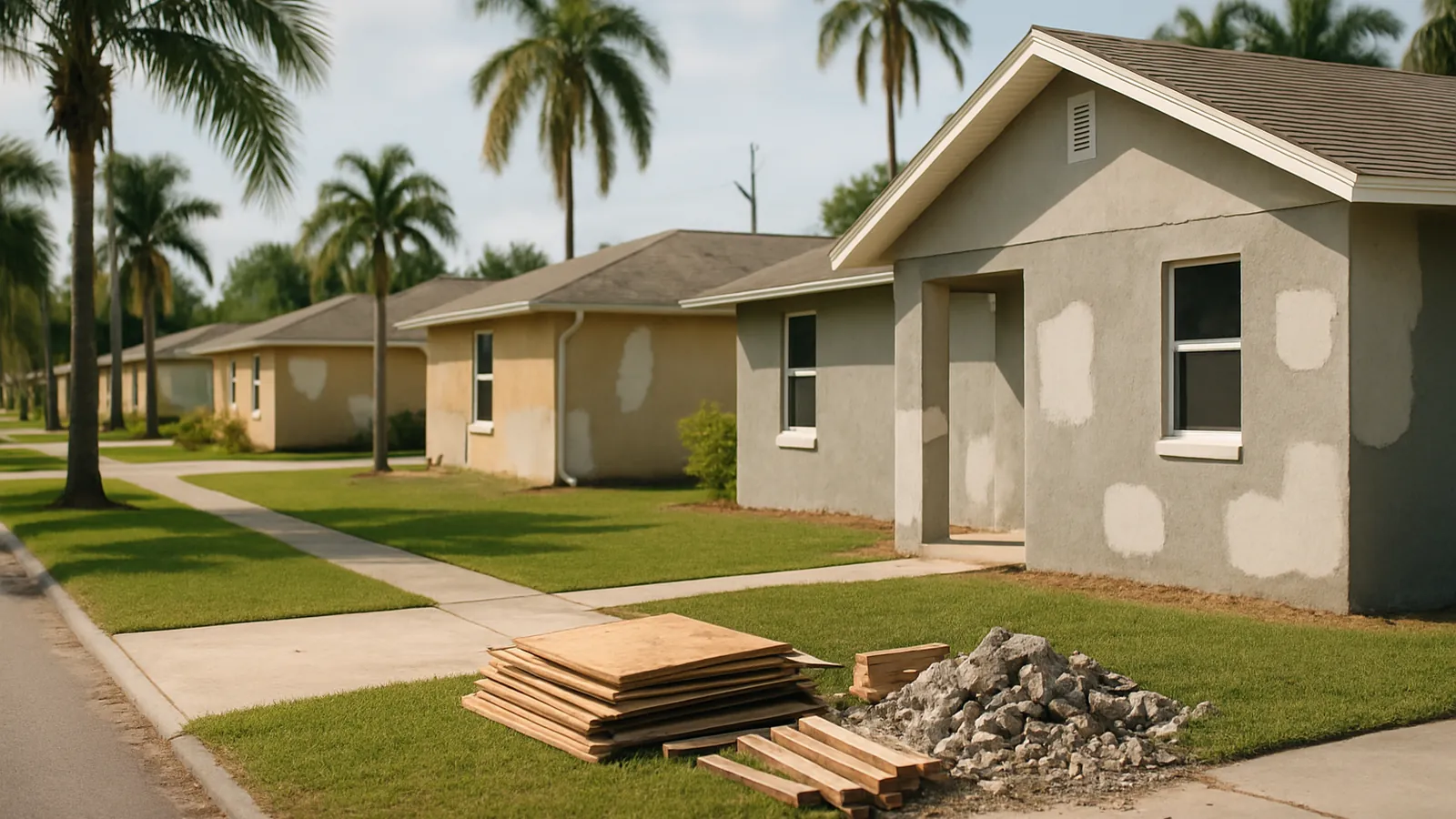
A mold removal inspection in Mobile is free with us; independent testing runs $300–$800. The fastest route to an entry path here is storm direction — a leak that opens only when rain is driven against one elevation is a detail on that elevation.
What comes out of the visit, the handful of cases where a lab is worth paying, and the four features that make a report usable.
Direction is data
Most inspections start and end with what is visible. On the Gulf Coast that leaves the most useful piece of evidence on the table, because a large share of intrusion here is directional. Rain driven horizontally against a wall tests details that vertical rain never touches, and it does so only when the wind is right.
So we ask when you first saw it, whether it has recurred, and what the weather was doing. A stain that appears during southerly blows and stays quiet through ordinary rain has already told you which elevation to open up. That is worth more than a spore count, and it costs nothing to collect.
What the free inspection produces
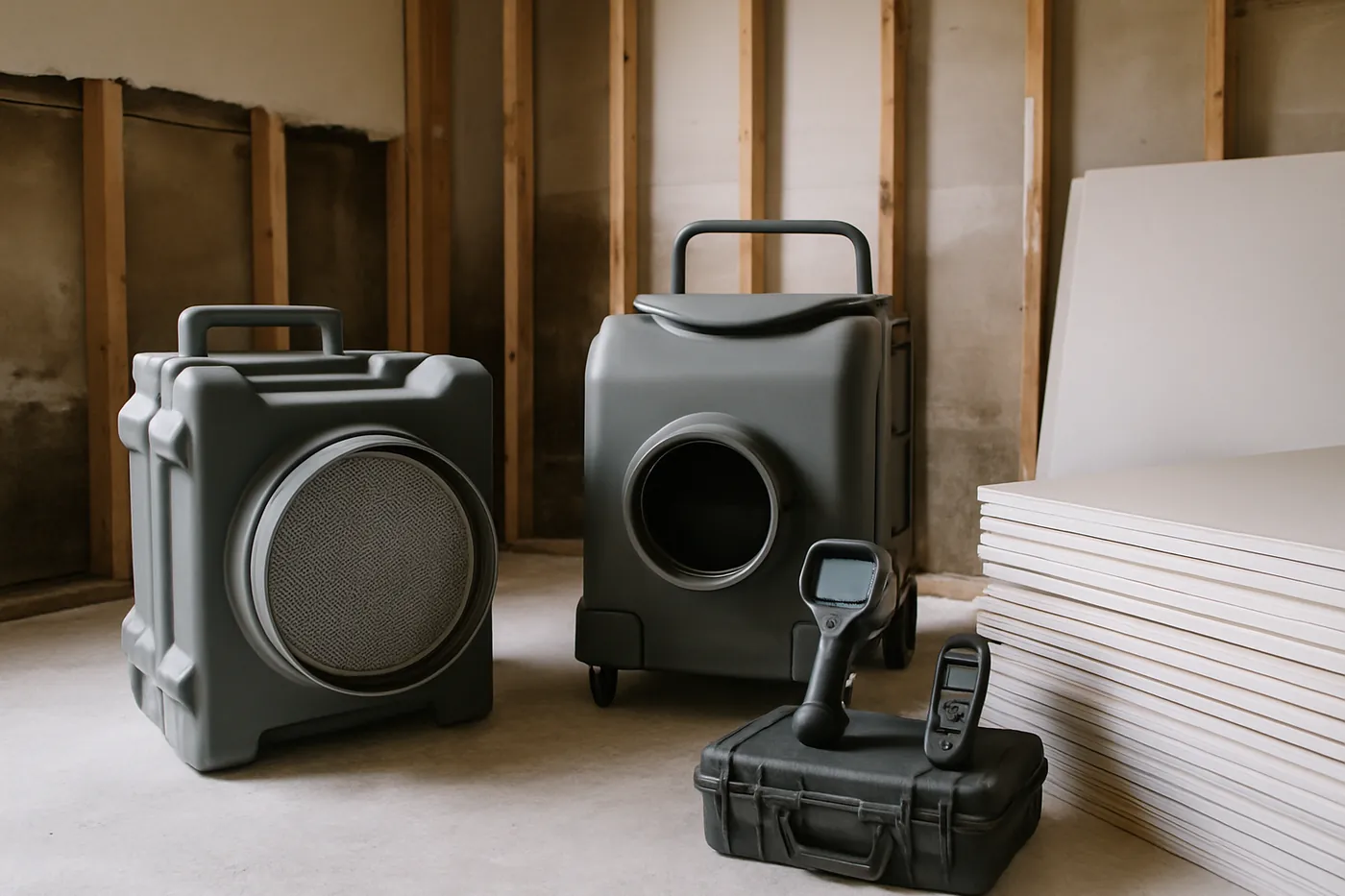
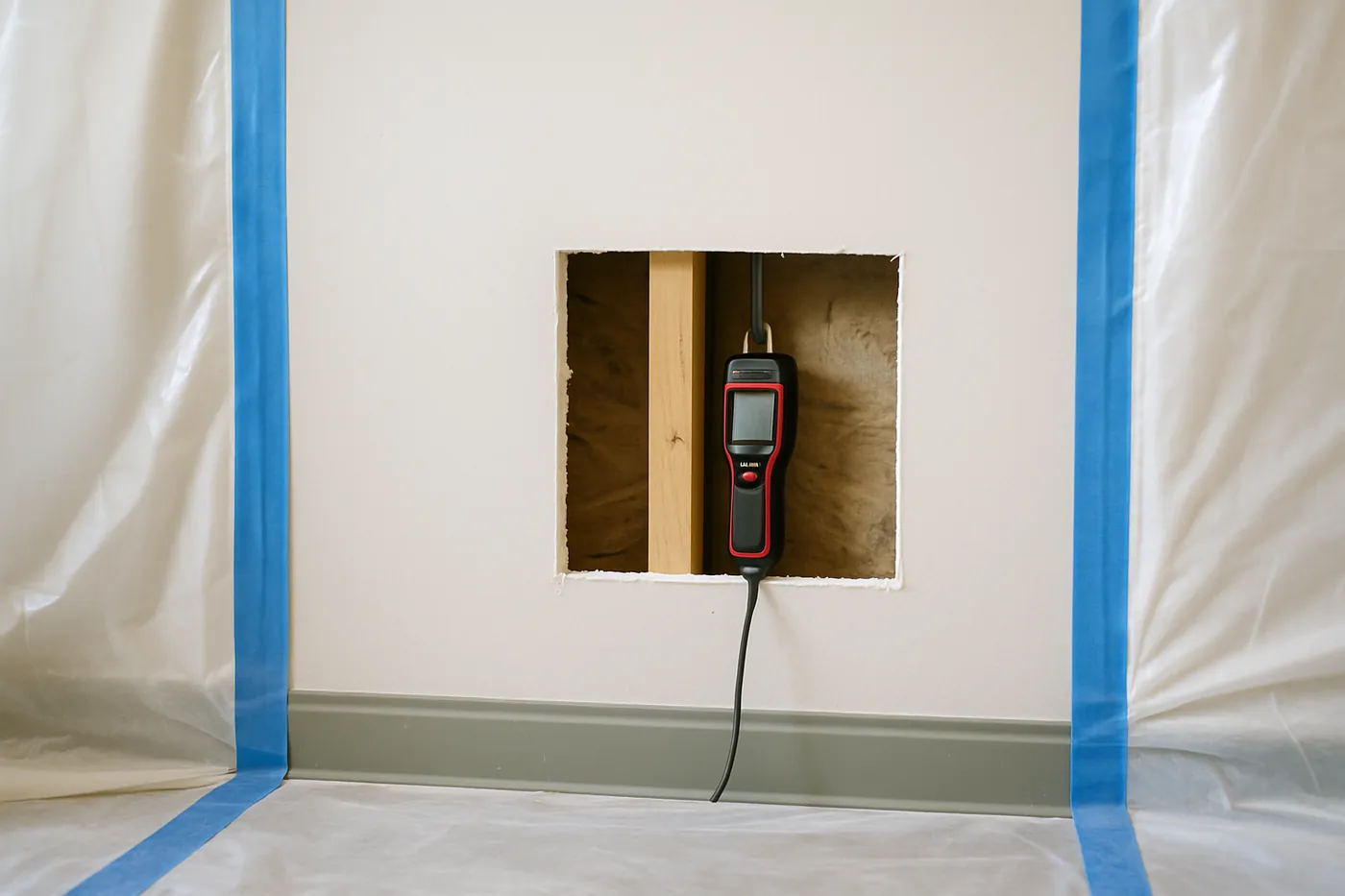
- Moisture content in affected materials and cavity readings where warranted
- The storm-direction history, written down and used
- An exterior review of the elevation in question — flashing, window heads, cladding laps
- A crawl space or under-house entry, and an attic look including duct condition
- Photographs of everything reported
- A written scope naming the entry path, the standard, and a price per line
When testing earns its cost
| Situation | Worth testing? | Why |
|---|---|---|
| Visible growth, findable cause | Usually no | Remediation is identical regardless of species |
| Smell with nothing visible | Yes | Sampling can guide a search that inspection could not finish |
| Physician-raised health concern | Yes | Documentation belongs in that conversation |
| Dispute with a seller, insurer, or landlord | Yes, independently | You want a party with no stake in the remediation invoice |
| After a large remediation | Sometimes | Post-work verification is reasonable on a big job |
| Buying a Gulf Coast house | Inspection first | Readings and an entry-path review tell you more per dollar |
The limit of a lab result
There is no legal ceiling for indoor mold in this state, which means no laboratory figure can declare a house acceptable or unacceptable. When a spore count is presented as though it failed some official standard, the standard being referenced does not exist.
Sampling does one real job well: it compares. This room against that one, indoors against the air outside, before against after. Used that way it can confirm something you already had cause to suspect. Sold as a pass-or-fail judgment, it is theater, and worth reading the invoice carefully over.
If somebody has already inspected
Pull out the report and look for four features. Dated readings with the locations recorded. Photographs. A statement of how water reached the material. And the standard the proposed work will be held to. A document carrying those can be set beside another document carrying those, and you can choose. A document carrying a dollar figure and a Latin name gives you nothing to weigh it against.
Send us what you have. We will put it next to our own measurements and tell you where the two accounts line up and where they do not. Pricing sits in the cost guide.
The visit, answered plainly
What does a mold inspection cost in Mobile?
Ours is free, including moisture and cavity readings, the storm-direction history, and a written scope. Independent third-party sampling through a hygienist generally runs $300-$800, and there are situations where paying for that independence is the right call.
Why do you ask about wind direction?
Because it is frequently the fastest route to the entry path. A leak that opens only when rain is driven against one elevation is a detail on that elevation, and knowing which one narrows an inspection from a whole building to a few square feet. Rainfall totals do not carry that information; storm direction does.
Do I need testing, or just an inspection?
An inspection, in nearly every case. Species and concentration are interesting and almost never change the work, because a colonized wall comes out the same way whatever grew on it. Sampling starts earning its keep only when there is a fight, a medical question, or a smell with nothing to look at.
Should the company testing also do the removal?
When something significant rides on the answer - a closing, an argument with a carrier, a doctor asking questions - put the assessment in hands that will not profit from the repair. For a stained wall with a cause anyone can point at, paying twice for two visits buys very little.
What should the written report contain?
Dated readings with locations, photographs, the extent of affected material, a plain statement of how water entered or where condensation formed, the standard the work will follow, and line pricing. A report with a total and a species name but no entry path cannot be compared to any other report.
Get a free Mobile mold inspection
Describe what you have found — a stain that appears only after a hard blow, a room that smells musty every August, dark growth behind furniture on an outside wall, a ceiling mark that showed up after a storm. Two details help most: which wall, and whether it tracks the weather. Expect a reply the same working day.