
HVAC and duct mold removal in Mobile runs $1,000–$4,000. The Gulf Coast cause that gets missed most is an oversized system: it satisfies the thermostat in short cycles and shuts off before dehumidifying, leaving the house cold and sitting above 60% humidity.
Why run time matters more than capacity here, where growth actually forms inside a system, and what to check yourself.
Cooling and drying are two different jobs
An air conditioner removes moisture only while it is running. Humid air passes over a cold coil, water condenses on it, and that water drains away. Stop the cycle early and you have removed heat without removing much water at all.
That is exactly what an oversized unit does. It drives the temperature down quickly, the thermostat is satisfied, and the system shuts off — over and over, in short bursts. In a dry climate nobody notices. In a market where outdoor humidity sits near or above 70% for much of the year, the result is a house at a comfortable temperature carrying enough moisture in the air to grow things on any surface the system has chilled.
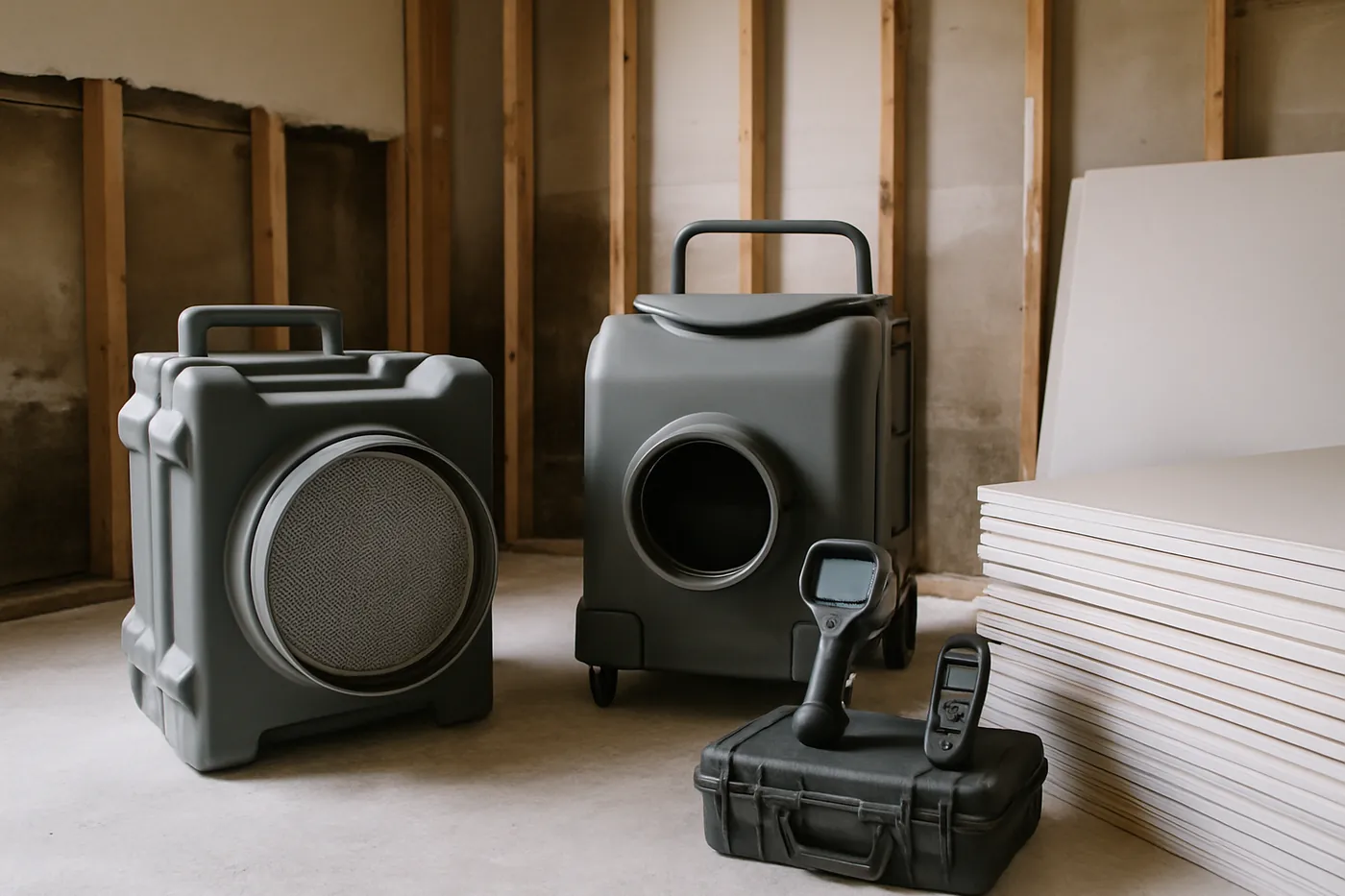
What to check yourself
- Run times on a hot afternoon. Repeated cycles of ten minutes or less suggest oversizing; a correctly matched system runs long and steady in July
- Indoor humidity. An inexpensive hygrometer in a hallway — persistently above 60% with the system running is the symptom
- The condensate drain. If little or no water is leaving on a humid day, the system is not dehumidifying much
- The drain pan for standing water, and the coil for growth
- Duct insulation in the attic, for compressed, torn, or missing sections
- Return joints under the house — air being drawn in at a seam is a crawl space problem arriving in every room
Where growth forms inside a system
| Location | Why it is wet | Response |
|---|---|---|
| Drain pan and coil | Wet by design; worse if the drain is slow | Clean components, clear the condensate line |
| Outside of attic supply ducts | Cold surface in hot, near-saturated air | Repair or replace insulation; see attic work |
| Interior of flex duct | Porous liner that has been wet | Replacement is usually more honest than cleaning |
| Return duct in an open crawl | Pulls humid outside air into the system | Seal the return, then clean |
| Floor register boots | Cold metal meeting humid air at the floor | Seal the boot, clean locally |
| The house generally | System cools without dehumidifying | Sizing and runtime, not a cleaning |
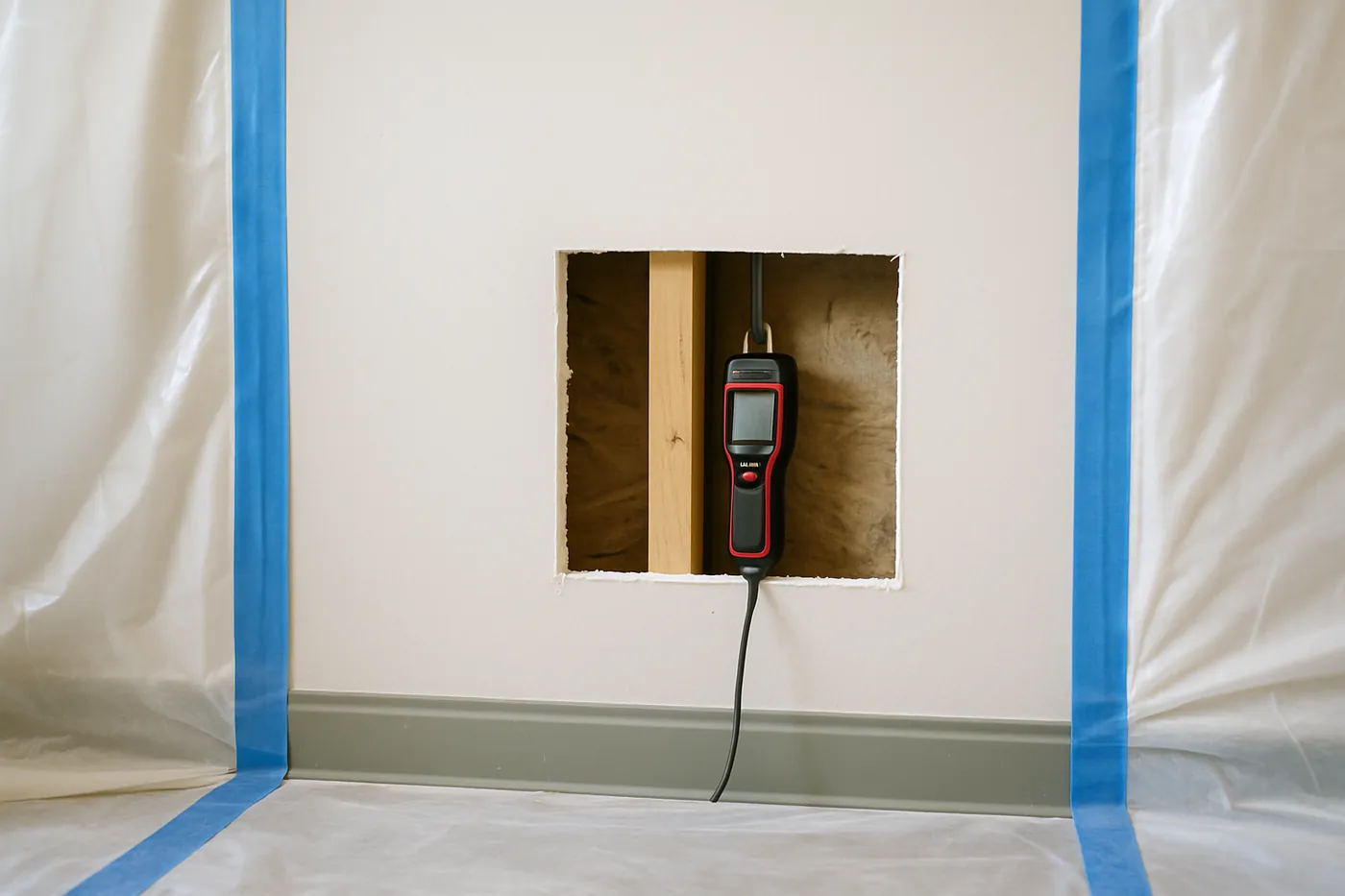
Three possible answers, and one of them is nothing
Sheet metal takes cleaning well, holds up afterward, and rarely justifies tearing out. Flex duct runs the other way: once the inner liner has been contaminated, getting it genuinely clean is difficult to guarantee, and swapping the run is frequently the cheaper as well as the more candid recommendation.
Then there is the third case, where nothing needs cleaning at all. Sound ducts attached to a system that never runs long enough to wring water out of the house means the ductwork is innocent and the money should go elsewhere. We will tell you which of the three applies instead of quoting the biggest one by reflex. Figures live in the cost guide.
Duct systems, answered plainly
What does HVAC and duct mold removal cost in Mobile?
Expect $1,000-$4,000, moving with the size of the system, how much of the run is involved, and whether the coil, blower, and pan need work too. Fixing whatever caused it - torn wrap, a return sucking crawl air, a unit that will not dehumidify - carries its own price, and that is the half that stops a repeat.
My house is cold but feels clammy. What is that?
Usually a system that cools faster than it dehumidifies. Air conditioners remove moisture only while running, so an oversized unit satisfies the thermostat in short bursts and shuts off before much water has been pulled out of the air. The result is a house at 72 degrees sitting at uncomfortably high humidity.
How do I know if my system is oversized?
Watch the run times on a hot afternoon. Cycles of ten minutes or less, repeated often, point at a unit that is larger than the load. A correctly sized system runs long and steady in July. You can also put an inexpensive hygrometer in a hallway - indoor humidity persistently above 60% with the AC running is the symptom.
Does mold grow inside the air handler?
It can, and the drain pan and coil are the usual locations because they are wet by design. A pan that is not draining, a clogged condensate line, or a coil that stays wet between cycles all provide standing water inside conditioned equipment. That is worth checking before assuming the ductwork is the problem.
Is duct cleaning worth it?
As a standalone purchase, often not. As part of correcting something documented - visible growth on components, a return pulling air from under the house, a system that ran through a water event - it is appropriate. Cleaning a clean system with no moisture problem changes very little.
Get a free Mobile mold inspection
Describe what you have found — a stain that appears only after a hard blow, a room that smells musty every August, dark growth behind furniture on an outside wall, a ceiling mark that showed up after a storm. Two details help most: which wall, and whether it tracks the weather. Expect a reply the same working day.