
Insurance covers mold removal in Mobile when it follows a covered loss — including wind-driven rain entering through a storm-created opening — subject to a mold sublimit often in the low thousands. Rising water is flood, and humidity growth is generally excluded.
The distinction that decides Gulf claims, the deductible that surprises people, and how to document before anything is moved.
Wind-driven rain or flood
This is the first question an adjuster answers and the one homeowners are least prepared for. Water blown through an opening the storm created — a breached roof, a broken window, cladding that failed — is generally handled under a homeowners policy. Water that rose off the ground and entered at floor level is flood, and flood is a separate policy that many homes do not carry.
Gulf Coast events routinely produce both at once, in the same room, within hours of each other. Which is exactly why what you photograph in the first hour matters so much: the high-water line, the point of entry, and what was wet where. After cleanup begins, that distinction rests on memory, and memory loses these arguments.
The two numbers to look up before hurricane season
Your named-storm deductible. Coastal policies commonly apply a separate, percentage-based deductible when damage comes from a named tropical system, instead of the flat dollar figure on ordinary claims. Because it is a percentage of dwelling coverage rather than a fixed amount, it can be several times larger than the deductible homeowners have in mind.
Your mold sublimit. Even on a fully covered loss, most policies cap mold remediation separately, frequently in the low thousands, under a heading along the lines of “Fungi, Wet or Dry Rot, or Bacteria.” It tells you in advance how much of a remediation you are actually insured for, which changes how urgently you treat the first forty-eight hours — fast drying is what keeps a water claim from becoming a mold claim at all.
Six pieces of evidence carry a claim
| What to have | What it settles |
|---|---|
| Pictures with dates, shot before anybody cleaned | Whether this was rain forced through an opening or water off the ground |
| The mark water left on the wall | Nothing indicates flooding more plainly |
| Close shots of the breach itself | Demonstrates the storm made the opening |
| Whatever part failed, kept in a box | Hard evidence when a component gave way suddenly |
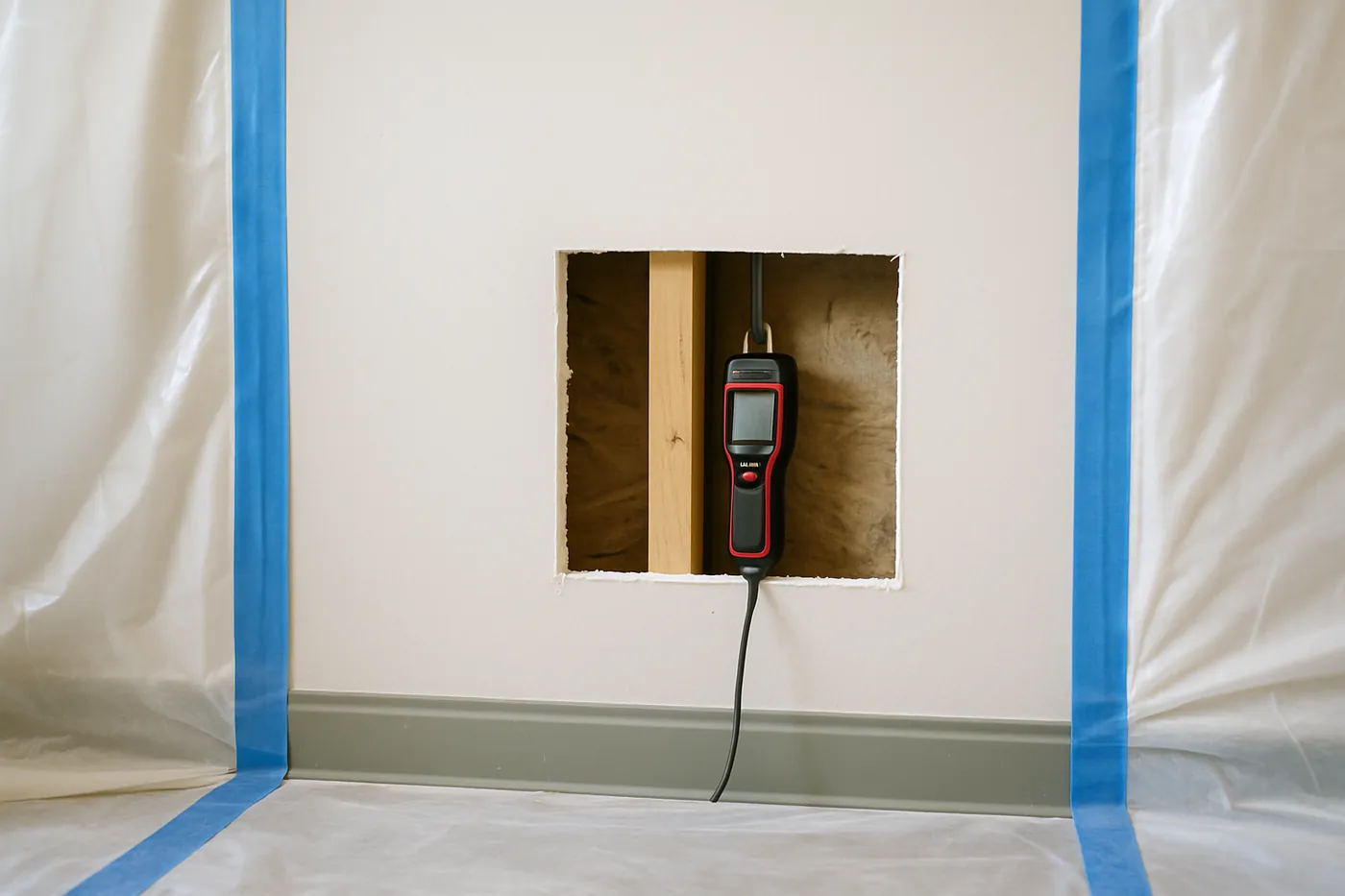
| Meter readings with dates on them | Puts a number on the damage and anchors when it happened |
| Proof drying started quickly | Carriers require mitigation, and slowness gets charged back to you |
Mitigation is not optional
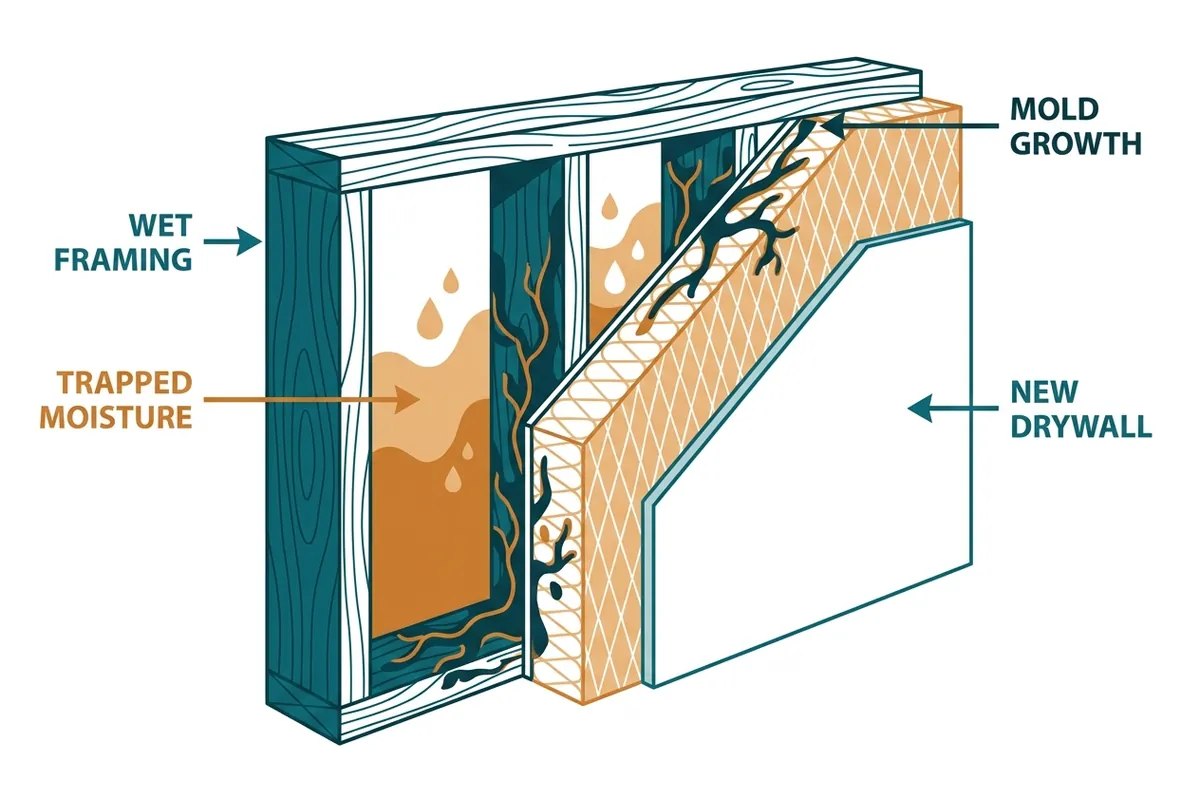
Homeowners often wait for an adjuster before touching anything, reasoning that disturbing the scene will hurt the claim. That instinct is half right: document first, thoroughly. But policies generally require you to take reasonable steps to prevent further damage, and in a climate where growth can start within 24 to 48 hours, waiting several days is the most expensive possible choice.
Photograph everything, then start drying. The documentation preserves the claim; the drying preserves the house.
Where our role ends
What we contribute is measurable: numbers, photographs, and a document stating how water reached the material. If an adjuster wants to go through those findings with us, we will. What we will not do is predict the outcome of your claim or negotiate it — that conversation belongs to you, your agent, and the contract you signed with your carrier.
If the answer turns out to be no, the cost guide shows what the work runs when you are paying for it yourself, so you can decide with the real figure in front of you.
Coverage, answered plainly
Does homeowners insurance cover mold removal in Mobile?
It depends on how the water arrived. Mold resulting from a sudden covered loss - a burst supply line, an appliance failure, or wind-driven rain entering through a storm-created opening - is commonly covered, subject to a mold sublimit. Mold from humidity, condensation, or long-term seepage is typically excluded.
What is the difference between wind-driven rain and flood?
Where the water came from. Rain blown through an opening the storm created - a breached roof, a broken window, failed cladding - is generally a homeowners matter. Water that rose from the ground and came in at floor level is flood, and that requires separate flood coverage. Gulf Coast events frequently produce both.
What is a named-storm deductible?
A separate, usually percentage-based deductible that applies when damage comes from a named tropical system, rather than the flat dollar deductible on ordinary claims. Because it is a percentage of dwelling coverage, it can be far larger than homeowners expect. Find yours in the policy declarations before hurricane season, not during it.
What is a mold sublimit?
A second ceiling that applies to mold work alone. It stays in force even where the water damage beneath it is covered without argument, and the figure is commonly a few thousand dollars. In practice it often sets what the whole claim is worth to you, and almost nobody hears about it before filing.
How do I document a storm claim properly?
Photograph before moving anything, with dates preserved in the files. Capture where water is and where it entered, and the high-water line if there was one, because that is what separates wind-driven rain from flood later. Keep any failed component. Get dated moisture readings. Start drying immediately - policies expect you to mitigate.
Get a free Mobile mold inspection
Describe what you have found — a stain that appears only after a hard blow, a room that smells musty every August, dark growth behind furniture on an outside wall, a ceiling mark that showed up after a storm. Two details help most: which wall, and whether it tracks the weather. Expect a reply the same working day.